Customers want fast answers, and AI customer service can now deliver them around the clock. But everyone has also been stuck in a chatbot loop that would not let them reach a person. The difference between a helpful AI assistant and an annoying one is not the technology. It is knowing which conversations AI should handle and when to hand over to a human. Here is the framework I use when setting up AI support for small businesses.
What AI customer service is good at
- Answering common questions: hours, prices, delivery times, policies
- Order status and booking changes when connected to your systems
- Collecting details before a human takes over
- Replying instantly outside business hours
- Routing messages to the right person or department
- Drafting replies for staff to review and send
When a human should take over
- Complaints, refunds and anything emotional
- High-value sales conversations
- Complex technical problems
- Anything involving health, legal or financial advice
- When the customer asks for a person
- When the AI is not confident in its answer
The golden rule: the customer should always be able to reach a human easily. Hiding that option saves a few minutes and costs you customers.
How to set up AI customer service the right way
- Start with your top 20 questions. Check your inbox, chat logs and calls. These usually cover most enquiries.
- Write clear, approved answers. Ground the AI in your own content so it does not invent policies. See AI hallucinations for why this matters.
- Label it honestly. Tell people they are chatting with an AI assistant. It builds trust and is required in some places, such as under the EU AI Act.
- Design the handoff. Pass the conversation summary to a person so the customer does not repeat themselves.
- Connect your systems carefully. Give read access for order and booking lookups; limit what the AI can change.
- Review conversations weekly. Fix wrong answers, add missing ones and spot new questions.
- Measure what matters. First response time, resolution rate, handoff rate and customer satisfaction.
Chatbot, email assistant or phone agent?
- Website chat: best for quick pre-sale questions and lead capture.
- Email and form replies: AI drafts or sends replies within minutes. This is where many businesses lose leads. My post on AI agents for lead follow-up covers this.
- SMS and WhatsApp: great for booking reminders and confirmations.
- AI voice agents: improving quickly for booking and simple calls, but test thoroughly before using them with customers.
Why I switched off my own auto-reply
I had an automatic first reply on my Fiverr inbox. Every new buyer got the same friendly message within seconds, asking them to share their website link and what they needed.
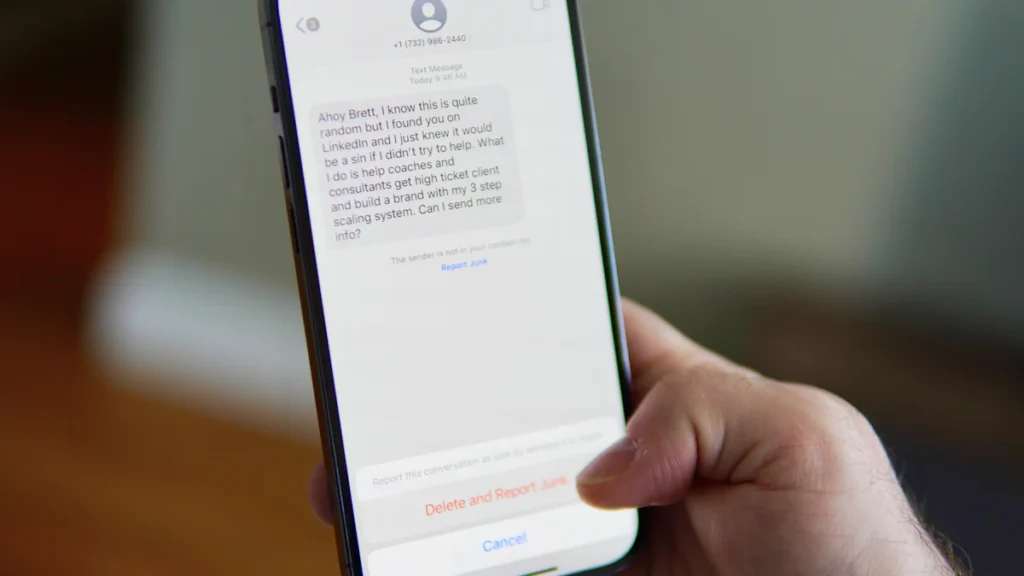
This week I turned it off. One buyer had already put their website address in the very first line of their message, and the auto-reply still asked for it. Another wrote about a phone-based assistant role, and got a reply asking for a website. Nothing in it was wrong, it just wasn’t listening. To a buyer, that reads like nobody has looked at their message yet.
The lesson carries over to any chatbot: an automatic reply should only say things that are true for every person who receives it. Anything that depends on what they wrote needs a person, or a bot that actually reads the message.
Common mistakes
- Letting the bot answer everything instead of a defined set of topics
- No easy route to a human
- Out-of-date answers after prices or policies change
- Collecting personal data without a clear privacy notice
- Never reading the conversations
If you want AI support connected to your website, CRM and booking system, my AI automation service and GoHighLevel setup can get you there with the right guardrails.
FAQ
Is AI customer service good for small businesses?
Yes, for common questions, after-hours replies and routing. Keep humans for complaints, complex issues and high-value conversations.
Will customers be annoyed by a chatbot?
Only if it is unhelpful or hides the human option. Fast, accurate answers with an easy handoff usually improve satisfaction.
Do I have to tell customers they are talking to AI?
It is best practice everywhere and a legal requirement in some regions, including the EU.
How do I stop a chatbot giving wrong answers?
Limit it to your approved content, tell it to hand off when unsure and review conversations regularly.
What should I measure?
First response time, resolution rate, handoff rate, customer satisfaction and leads captured.